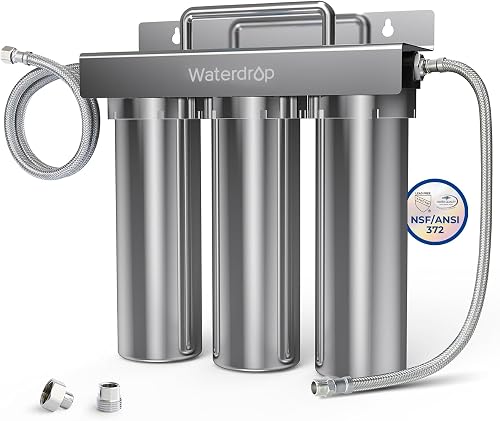
Waterdrop WD-TST Filtration System Review
Our verdict
The WD-TST is an under-sink ultrafiltration system that steps above standard activated carbon by using a hollow-fiber UF membrane, which is designed to filter particles down to a fraction of a micron. At $149.99 with a 4.5-star average from 942 reviews, it is a solid choice for buyers who want a middle ground between basic carbon filtration and a full RO system.
Check price on AmazonBest for
Households on chlorinated city water who want sediment, cyst, and bacteria reduction beyond what activated carbon offers, but do not need to remove dissolved minerals or TDS.
Skip if
Your primary concern is dissolved solids, heavy metals, or total TDS reduction. Ultrafiltration does not remove dissolved minerals the way an RO membrane does.
- Purification Ultra Filtration
- Capacity / life 8000 Gallons
- Install Under-Sink
- Material Nsf/Ansi Approved Components
- Dimensions 12.99 X 4.92 X 14.49 In
- Weight 13.0 lb
- Priced 51% below the category median ($307.99 across 65 tracked models)
Our scorecard
-
Owner rating4.5/5
4.5 average across 942 owner ratings
-
Popularity3.8/5
942 owner reviews, more than most models here
The overall score is owner satisfaction weighted by how many reviews back it, so a high rating from few reviews counts for less. The bars below show where this model stands against the other water filtration: replacement filters, under-sink and reverse osmosis systems, filter pitchers, water dispensers, coolers, faucet filters and softeners we track in this category on price, popularity and size. Context, not marks against it, and our read of the data, not a lab test.
Overview
The WD-TST uses ultrafiltration rather than activated carbon or reverse osmosis. A UF membrane is designed to retain bacteria, cysts, sediment, and particles above its rated pore size while allowing dissolved minerals to pass through. This makes it different from RO in an important way: the water retains its natural mineral content, which some buyers prefer over the flat taste that fully demineralized RO water can have.
The system uses NSF/ANSI approved components. Filter life is rated at 8,000 gallons, a reasonable interval for typical household use. At 13 pounds and measuring 12.99 x 4.92 x 14.49 inches, the TST is heavier than slim inline carbon filters but remains manageable under a standard sink. No third-party certification is listed.
The 4.5-star score from 942 reviewers gives this system a reliable quality signal. It occupies a practical niche for buyers who want microbial protection that carbon alone does not provide, without moving to the cost and complexity of full RO.
Pros
- Ultrafiltration membrane designed to reduce bacteria, cysts, and fine particles
- Retains natural minerals, unlike RO systems
- 8,000-gallon filter life
- NSF/ANSI approved components
- 4.5 stars across 942 reviews
Cons
- Does not reduce dissolved solids, TDS, heavy metals, or nitrates
- Heavier than typical carbon inline filters at 13 pounds
- No third-party certification listed for specific contaminant reduction claims
- Higher price than basic activated carbon alternatives
Specifications
| Purification | Ultra Filtration |
|---|---|
| Capacity / life | 8000 Gallons |
| Install | Under-Sink |
| Material | Nsf/Ansi Approved Components |
| Dimensions | 12.99 X 4.92 X 14.49 In |
| Weight | 13.0 lb |
Performance notes
The WD-TST uses ultrafiltration as its purification method with NSF/ANSI approved components. UF membranes are designed to filter particles, sediment, bacteria, and cysts based on pore size, but dissolved solids pass through. Filter capacity is 8,000 gallons. Dimensions are 12.99 x 4.92 x 14.49 inches, weight is 13 pounds. Install type is under-sink. No power source is required. No contaminant reduction certification is listed.
What buyers say
With 942 reviews and a 4.5-star average, the WD-TST has strong and consistent buyer feedback for its price tier. The review volume is sufficient to treat the rating as a reliable signal rather than a small sample outlier.
More from Waterdrop


Similar water filtration: replacement filters, under-sink and reverse osmosis systems, filter pitchers, water dispensers, coolers, faucet filters and softeners to consider
Frequently asked questions
How is ultrafiltration different from reverse osmosis?
Both use membranes, but the pore sizes differ significantly. A UF membrane is designed to block bacteria, cysts, and particles while allowing dissolved minerals and salts to pass through. An RO membrane has much smaller pores and is designed to reduce dissolved solids, heavy metals, and many dissolved contaminants. The practical result is that UF water retains its mineral content and RO water is closer to purified. RO systems also produce wastewater; UF systems generally do not.
Does the WD-TST need a dedicated faucet?
Many under-sink UF systems connect inline and deliver filtered water through your existing cold-water faucet. However, setup details vary by product. Review the installation instructions for the WD-TST to confirm whether a dedicated filtered-water faucet is required or if the system feeds the existing tap.
Is the 8,000-gallon capacity realistic for annual use?
For a household of four using approximately 3 to 4 gallons per day through the filter, 8,000 gallons represents about five to seven years at that rate. In practice, most manufacturers recommend replacing UF filters annually or every two years regardless of gallon count to maintain consistent performance and prevent media degradation.