Best Under-Sink Water Filters and RO Systems for 2026
Under-sink and reverse osmosis systems are the most capable home water filtration option you can buy without hiring a plumber for a whole-house job. Unlike pitcher filters or faucet attachments, these systems treat every drop at the point of use, sitting out of sight under the kitchen sink with a dedicated dispense faucet. The category splits into two main types: carbon-block under-sink filters that improve taste and reduce common contaminants, and reverse osmosis systems that push water through a semi-permeable membrane to reduce dissolved solids, heavy metals, and other impurities at higher rates than carbon alone. Prices range from around $37 for a single-stage carbon cartridge up to $1,400 for a high-output tankless RO unit, so matching the right system to your water quality and daily usage matters. We scored every option on Amazon buyer demand, verified review volume, rating, purification method, capacity, and price to surface the picks worth your money in 2026. Questions? Reach us at [email protected].
Top picks at a glance
 Best Overall Under-Sink Filter Waterdrop WD-TSU Filtration System
$139.99
Best Overall Under-Sink Filter Waterdrop WD-TSU Filtration System
$139.99
 Best Value Under-Sink Filter Aqua Crest AQ-5KDC Filtration System
$36.99
Best Value Under-Sink Filter Aqua Crest AQ-5KDC Filtration System
$36.99
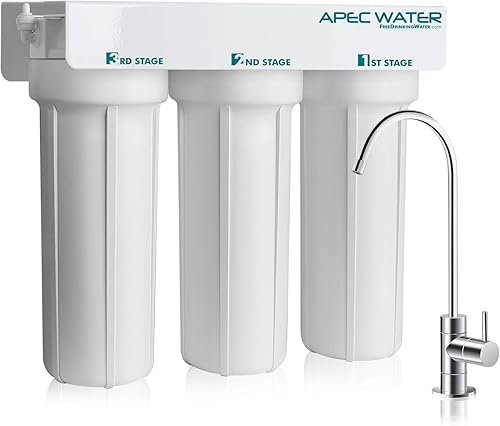 Most Proven Under-Sink Carbon System Apec Water WFS-1000 Filtration System
$162.99
Most Proven Under-Sink Carbon System Apec Water WFS-1000 Filtration System
$162.99
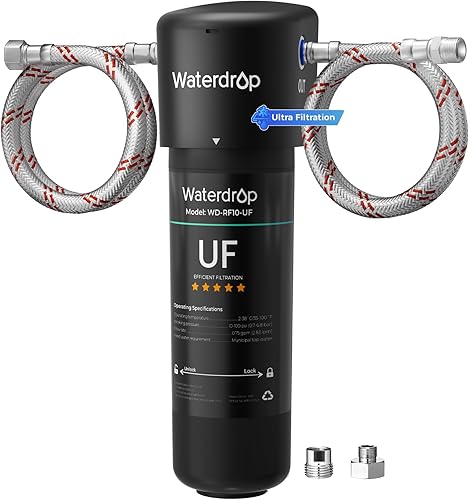 Best High-Review Compact Under-Sink Filter Waterdrop WD-10UA-UF Filtration System
$63.99
Best High-Review Compact Under-Sink Filter Waterdrop WD-10UA-UF Filtration System
$63.99
 Best Under-Sink RO System Overall Apec Water ROES-PH75 Filtration System
$239.99
Best Under-Sink RO System Overall Apec Water ROES-PH75 Filtration System
$239.99
Compare every pick
-
1 Waterdrop WD-TSU Filtration System $139.99
- Type
- Filtration System
- Purification
- Activated Carbon
- Capacity / Life
- 2200 Gallons
-
2 Aqua Crest AQ-5KDC Filtration System $36.99
- Type
- Filtration System
- Purification
- Activated Carbon
- Capacity / Life
- 5000 Gallons
-
3 Apec Water WFS-1000 Filtration System $162.99
- Type
- Filtration System
- Purification
- Activated Carbon
- Capacity / Life
- 10000 Gallons
-
4 Waterdrop WD-10UA-UF Filtration System $63.99
- Type
- Filtration System
- Purification
- Activated Carbon
- Capacity / Life
- 8000 Gallons
-
5 Apec Water ROES-PH75 Filtration System $239.99
- Type
- Filtration System
- Purification
- Reverse Osmosis
- Capacity / Life
- 75 G/Day
-
6 iSpring RCC7AK-UV Filtration System $329.99
- Type
- Filtration System
- Purification
- Reverse Osmosis
- Capacity / Life
- 75 Gallons
-
7 iSpring RCC7P-AK Filtration System $339.13
- Type
- Filtration System
- Purification
- Reverse Osmosis
- Capacity / Life
- 75 Gallons
-
8 iSpring RO500AK-BN Filtration System $625.06
- Type
- Filtration System
- Purification
- Reverse Osmosis
- Capacity / Life
- 500 Gallons
-
9 Waterdrop WD-KJ600 Filtration System $599.00
- Type
- Filtration System
- Purification
- Reverse Osmosis
- Capacity / Life
- 1600 Gallons
-
10 Waterdrop WD-17UA-UF Filtration System $79.99
- Type
- Filtration System
- Purification
- Ultra Filtration
- Capacity / Life
- 24000 Gallons
Best Under-Sink Water Filters and RO Systems for 2026, ranked
- Purification Activated Carbon
- Capacity / life 2200 Gallons
- Install Under-Sink
- Material Nsf/Ansi Approved Components
- Dimensions 14.81 X 4.68 X 13.97 In
The Waterdrop WD-TSU is the most purchased under-sink filter in this roundup by a significant margin, with over 10,000 units bought last month and 3,347 verified reviews at 4.5 stars. It uses activated carbon purification in a slim under-sink form factor measuring 14.81 by 4.68 by 13.97 inches and is rated for 2,200 gallons of filter capacity. At $139.99, it hits a practical price point that puts serious under-sink filtration within reach of nearly any budget. Build materials are listed as NSF/ANSI approved components, and the compact profile fits most standard under-sink cabinets without repositioning supplies.
Best for: Households wanting the most proven under-sink carbon filter with strong real-world demand backing
Pros
- Highest buyer demand in the category at 10,000+ purchased last month
- 4.5 stars across 3,347 reviews shows consistent satisfaction
- Compact footprint at under 15 inches tall fits standard cabinets
- NSF/ANSI approved component materials
- Accessible $139.99 price for a dedicated under-sink system
Cons
- Activated carbon only, not designed to reduce dissolved heavy metals or nitrates like an RO system
- 2,200-gallon capacity requires filter replacement more frequently than higher-capacity alternatives
Bottom line: The WD-TSU is the category leader in actual purchase volume. If you want what most buyers are choosing, this is it.
Check price on Amazon Read the full review →
- Purification Activated Carbon
- Capacity / life 5000 Gallons
- Install Under-Sink
- Material Nsf/Ansi Approved Components
- Dimensions 11.02 X 5.12 X 3.15 In
- Weight 1.3 lb
The Aqua Crest AQ-5KDC earns the value award with a $36.99 price that is the lowest in this entire set, yet it still draws 5,000 monthly buyers and carries 1,300 reviews at 4.4 stars. It uses activated carbon purification in an under-sink install format and is rated for 5,000 gallons of filter life. Dimensions are 11.02 by 5.12 by 3.15 inches and the unit weighs 1.3 lbs, making it one of the smallest and lightest options available. Build materials are listed as NSF/ANSI approved components.
Best for: Budget-conscious buyers on municipal water who want under-sink convenience without RO complexity
Pros
- Lowest price at $36.99 in the entire roundup
- 5,000 monthly buyers confirms strong real-world adoption
- 4.4 stars across 1,300 reviews is solid at this price point
- 5,000-gallon capacity rated lifespan
- Very compact at just over 3 inches thick for tight cabinet installs
Cons
- Single-stage activated carbon only, not suitable as a stand-alone solution for well water or heavy metals
- Low price may indicate limited filter complexity compared to multi-stage systems
Bottom line: At $37, you are not getting RO filtration, but you are getting a proven, widely purchased under-sink carbon system at a price that is hard to argue with.
Check price on Amazon Read the full review →
- Purification Activated Carbon
- Capacity / life 10000 Gallons
- Install Under-Sink
- Material Polypropylene
- Dimensions 15 X 6 X 12 In
- Weight 13.0 lb
The Apec Water WFS-1000 combines the third-highest monthly purchase volume in the set (1,000 units) with 1,500 reviews at 4.3 stars, making it one of the most battle-tested under-sink activated carbon systems available. At $162.99 it is priced mid-range, and its 10,000-gallon capacity rating is the highest of any activated carbon under-sink system in this group. The polypropylene housing measures 15 by 6 by 12 inches and weighs 13 lbs, suggesting a more substantial build than lighter budget options. Installation is under-sink.
Best for: Buyers who want a proven, high-capacity carbon under-sink filter from an established brand
Pros
- 1,000+ monthly buyers and 1,500 reviews at 4.3 stars shows durable, long-standing demand
- 10,000-gallon capacity rating is the highest in the carbon under-sink category
- Apec Water is a well-established filtration brand with broad replacement filter availability
- Under-sink install keeps the countertop clear
- Reasonable $162.99 price for the capacity offered
Cons
- 4.3 stars is the lowest rating among the top demand picks, indicating some buyer friction
- Activated carbon only, not designed to reduce heavy metals or dissolved solids
Bottom line: The WFS-1000 has earned its place through sustained demand across 1,500 reviews. The 10,000-gallon capacity makes the per-gallon cost very low over time.
Check price on Amazon Read the full review →
- Purification Activated Carbon
- Capacity / life 8000 Gallons
- Install Under-Sink
- Material Nsf/Ansi Approved Components
- Dimensions 3.9 X 3.6 X 12.3 In
- Weight 1.34 lb
The Waterdrop WD-10UA-UF has accumulated 4,900 reviews at a strong 4.6 stars, the second-highest review count in the silo and one of the highest ratings in the set. At $63.99 it is the second-cheapest option in this roundup and its 8,000-gallon capacity rating gives a strong value-per-gallon figure. The under-sink unit uses activated carbon purification and measures just 3.9 by 3.6 by 12.3 inches, weighing 1.34 lbs, making it genuinely compact for tight cabinet installs. Build materials are listed as NSF/ANSI approved components.
Best for: Buyers who prioritize depth of real-world reviews and want a compact, affordable under-sink filter
Pros
- 4,900 reviews at 4.6 stars is one of the strongest quality signals in the entire set
- Very compact at under 4 inches in diameter and 12.3 inches tall
- 8,000-gallon capacity rating
- NSF/ANSI approved component materials
- $63.99 delivers strong value for the review depth behind it
Cons
- Activated carbon only, not an RO membrane system
- No bought_last_month data, so current purchase velocity is unknown
Bottom line: Nearly 5,000 buyers at 4.6 stars is a very strong trust signal at $63.99. Hard to beat for a carbon under-sink filter.
Check price on Amazon Read the full review →
- Purification Reverse Osmosis
- Capacity / life 75 G/Day
- Install Under-Sink
- Material Polypropylene
- Dimensions 15.5 X 5.25 X 17.5 In
- Weight 1.41 lb
The Apec Water ROES-PH75 is the most-reviewed under-sink RO system in this roundup with 4,000 reviews at 4.6 stars, and at $239.99 it is among the most competitively priced full RO systems in its class. It uses reverse osmosis purification with a 75 GPD daily output capacity, housed in polypropylene at 15.5 by 5.25 by 17.5 inches and weighing 1.41 lbs for the filter assembly. The under-sink install design positions the unit out of sight under the kitchen sink. Apec Water maintains strong replacement filter availability across major retailers.
Best for: Buyers who want a well-proven, moderately priced full RO system from a trusted filtration brand
Pros
- 4,000 reviews at 4.6 stars is the strongest quality signal of any RO system in the set
- RO purification designed to reduce a broad range of dissolved contaminants beyond what carbon alone addresses
- 75 GPD output is adequate for most family households
- $239.99 is competitive for a full RO system with this review depth
- Apec Water has broad filter replacement ecosystem
Cons
- Tank-based design takes up more cabinet space than tankless alternatives
- RO systems waste some water during the filtration process
Bottom line: If you want RO filtration and want to buy the most-reviewed option in the category, the ROES-PH75 is the answer.
Check price on Amazon Read the full review →
- Purification Reverse Osmosis
- Capacity / life 75 Gallons
- Install Under-Sink
- Dimensions 15 X 8 X 18 In
- Weight 20.0 lb
The iSpring RCC7AK-UV adds a UV disinfection stage to a standard 75 GPD reverse osmosis system, making it the best option in this set for buyers on well water or those who want an additional layer of microbial protection. It has 1,800 reviews at 4.5 stars and costs $329.99. The under-sink system measures 15 by 8 by 18 inches and weighs 20 lbs, which is consistent with full tank-based RO systems. The UV stage is designed to inactivate certain bacteria and viruses that could potentially pass through the RO membrane at low concentrations.
Best for: Well water users and buyers who want RO plus UV disinfection in a single under-sink unit
Pros
- UV stage adds microbial protection beyond what an RO membrane alone provides
- 1,800 reviews at 4.5 stars shows strong sustained satisfaction
- 75 GPD daily output handles typical household filtered water needs
- iSpring has strong after-sales support and wide replacement filter availability
- Under-sink install keeps the system hidden
Cons
- UV lamp requires periodic replacement in addition to standard filter stages
- $329.99 is higher than non-UV RO systems with comparable output
Bottom line: The best pick for anyone who wants RO memebrane filtration plus UV as a backup against microbial concerns.
Check price on Amazon Read the full review →
- Purification Reverse Osmosis
- Capacity / life 75 Gallons
- Install Under-Sink
- Dimensions 15 X 8 X 18 In
- Weight 20.0 lb
The iSpring RCC7P-AK is a 75 GPD under-sink RO system that includes an alkaline remineralization stage designed to add back minerals that the RO process removes. It carries 1,600 reviews at a strong 4.7 stars and is priced at $339.13. The system measures 15 by 8 by 18 inches and weighs 20 lbs, matching the footprint of the RCC7AK-UV. RO purification is the core technology, with the added pH-balancing stage as the differentiating feature. iSpring parts and replacement filters are widely available.
Best for: Buyers who want full RO filtration and prefer to add minerals back into the water after the RO process
Pros
- 4.7 stars across 1,600 reviews is one of the highest quality scores in the RO category
- Alkaline stage designed to restore minerals removed by the RO membrane
- 75 GPD output is sufficient for most households
- iSpring brand has proven long-term parts availability
- $339.13 is reasonable for a multi-stage RO system with a remineralization stage
Cons
- Alkaline stage adds one more filter to track and replace on schedule
- Tank-based design requires cabinet space for the pressure vessel
Bottom line: Strong reviews, a useful remineralization stage, and a proven brand make the RCC7P-AK a top pick for buyers who want RO water with restored mineral content.
Check price on Amazon Read the full review →
- Purification Reverse Osmosis
- Capacity / life 500 Gallons
- Install Under-Sink
- Dimensions 17.5 X 5.2 X 16.25 In
- Weight 21.0 lb
The iSpring RO500AK-BN is a tankless under-sink RO system rated at 500 GPD, making it the highest-output option among the top picks in this roundup. It draws 500 monthly buyers with 562 reviews at 4.7 stars, the joint-highest rating of any product on this list with meaningful review depth. At $625.06 it is the most expensive under-sink pick on this list, but the tankless design eliminates the storage tank and produces filtered water on demand. It measures 17.5 by 5.2 by 16.25 inches and weighs 21 lbs.
Best for: Larger households or buyers who use filtered water for cooking and ice makers and want on-demand RO without a storage tank
Pros
- 500 GPD output is far above the 75 GPD standard of most tank-based RO systems
- 4.7 stars across 562 reviews is one of the strongest ratings in the set
- Tankless design is more compact than tank-based RO and eliminates stagnant stored water
- 500 monthly buyers shows active real-world uptake
- Includes an alkaline remineralization stage
Cons
- $625.06 is a significant investment versus tank-based RO systems at half the price
- Requires adequate water pressure to hit the rated 500 GPD output
Bottom line: The top-rated tankless RO option in this roundup with real buyer demand behind it. Worth the premium if your household uses a high daily volume of filtered water.
Check price on Amazon Read the full review →
- Purification Reverse Osmosis
- Capacity / life 1600 Gallons
- Install Under-Sink
- Dimensions 17.5 X 6.7 X 16.6 In
The Waterdrop WD-KJ600 is a tankless under-sink RO system with 1,600-gallon filter capacity and 696 reviews at 4.4 stars. It draws 600 monthly buyers, the third-highest purchase volume in this roundup, at a $599 price point. The system uses reverse osmosis purification and measures 17.5 by 6.7 by 16.6 inches. Waterdrop is known for its compact under-sink RO designs, and the KJ600 represents their mid-to-high tier with a dedicated dispense faucet and an under-sink footprint that eliminates the storage tank.
Best for: Buyers who want a Waterdrop tankless RO upgrade from the entry-level WD-TSU with more contaminant reduction
Pros
- 600 monthly buyers confirms active ongoing demand
- 4.4 stars across 696 reviews is a credible quality signal
- Tankless design removes the storage tank from the cabinet
- RO purification designed to reduce a broad contaminant spectrum
- Waterdrop has strong filter replacement availability
Cons
- $599 is a significant spend for a system without third-party certification data in the listing
- 1,600-gallon capacity means more frequent membrane or filter replacements than higher-capacity RO systems
Bottom line: A solid tankless RO pick with real buyer volume and good ratings, priced competitively against iSpring's tankless offering.
Check price on Amazon Read the full review →
- Purification Ultra Filtration
- Capacity / life 24000 Gallons
- Install Under-Sink
- Material Nsf/Ansi Approved Components
- Dimensions 3.9 X 3.6 X 19.1 In
- Weight 4.0 lb
The Waterdrop WD-17UA-UF uses ultrafiltration rather than activated carbon or RO, making it a distinct option for buyers who want stronger particulate and microbial reduction than carbon provides while keeping all beneficial minerals in the water. It has 2,800 reviews at 4.5 stars and costs $79.99, putting it at a very accessible price point for a UF system. The 24,000-gallon capacity rating is the highest in the entire roundup. The under-sink unit measures 3.9 by 3.6 by 19.1 inches and weighs 4 lbs, with NSF/ANSI approved component materials.
Best for: Buyers who want stronger filtration than carbon alone but prefer to keep minerals in the water without the waste of RO
Pros
- 2,800 reviews at 4.5 stars is excellent for a non-RO under-sink system
- 24,000-gallon capacity rating is the highest of any product in this roundup
- Ultrafiltration retains beneficial minerals that RO removes
- Compact 3.9-inch diameter fits very tight cabinet spaces
- $79.99 is an outstanding price for the review depth and capacity
Cons
- UF membranes do not reduce dissolved heavy metals, nitrates, or fluoride the way an RO membrane does
- No bought_last_month data available to confirm current purchase velocity
Bottom line: Best-in-class capacity rating combined with nearly 3,000 reviews at 4.5 stars. The right pick if you want UF performance at a near-budget price.
Check price on Amazon Read the full review →Buying guide
Under-Sink Carbon Filters vs. Reverse Osmosis: Which Do You Need?
A standard under-sink carbon filter, such as the Waterdrop WD-TSU or the Apec WFS-1000, runs your tap water through activated carbon media that is designed to reduce chlorine taste, sediment, and certain volatile organic compounds. These systems are simple, require no electricity, waste no water, and deliver full flow pressure. Reverse osmosis systems add a semi-permeable membrane stage that is designed to reduce dissolved solids, lead, arsenic, nitrates, and fluoride at much higher rates than carbon alone. The tradeoff is that RO systems reject some water during the filtration process and typically produce water at a slower rate, often stored in a pressure tank or an internal reservoir. If your main concern is taste and chlorine odor on municipal water, a carbon under-sink filter is usually sufficient. If you have a private well, live in an area with elevated heavy metal levels, or want to reduce a broader spectrum of dissolved contaminants, an RO system is worth the added cost and complexity.
Tankless vs. Tank-Based RO Systems
Traditional RO systems like the iSpring RCC7P-AK use a pressurized holding tank, typically 2 to 4 gallons, that pre-fills so water is ready when you open the faucet. The downside is that the tank takes up significant cabinet space and can harbor bacteria if not flushed regularly. Tankless RO systems, such as the iSpring RO500AK-BN with its 500 GPD capacity, eliminate the storage tank entirely by producing water on demand at higher flow rates. Tankless units are more compact and generally more hygienic, but they cost more upfront and require adequate water pressure to function properly. For most households using 1 to 3 gallons of filtered water daily, a tank-based system at 75 GPD output is perfectly adequate. Larger families or households that use filtered water for cooking, ice makers, and drinking will benefit from a higher-output tankless system.
Understanding Filter Capacity and Replacement Costs
Capacity figures on under-sink filters are stated in gallons of total filter life before replacement is needed. The Apec WFS-1000 lists a 10,000-gallon capacity, the Pureplus WFS5300A lists 22,000 gallons, and the Waterdrop WD-17UA-UF ultrafiltration system claims 24,000 gallons. At an average household consumption of roughly 1 gallon of filtered water per day, 10,000 gallons represents about 27 years of use, which means most capacity claims effectively mean you are buying a system whose cartridge life far exceeds typical replacement intervals. More important than the headline capacity figure is the annual cost of replacement filters and how easy the cartridge swap is. Check that replacement filters are readily available and price out a 5-year ownership cost, including the system price, before committing.
Installation: What to Realistically Expect
Single-stage under-sink carbon filters are among the easiest plumbing projects a homeowner can tackle, typically involving a saddle valve on the cold supply line and a mounting hole for the dedicated faucet. Most buyers with basic tools complete the job in under an hour. Full RO systems are more involved: you connect to the cold supply, run a drain line to the P-trap, and drill a faucet hole in the sink or countertop. Budget 2 to 3 hours for a first-time install. Tankless RO systems follow the same basic steps but are lighter and more compact without a storage tank to position. Most systems ship with color-coded tubing and written instructions. If your cabinet space is tight, measure the under-sink area before ordering, particularly for tank-based RO units that can run 15 inches wide and 18 inches tall.
NSF/ANSI Components and What They Mean
Several Waterdrop and Aqua Crest products in this roundup list NSF/ANSI Approved Components as their material designation. This means the individual filter housing components are made from materials that meet NSF/ANSI standards for contact with drinking water, but it is not the same as a product-level NSF 42 or NSF 53 certification for specific contaminant reduction claims. A full NSF 42 certification covers aesthetic effects like taste and odor. NSF 53 covers health-related contaminants. NSF 58 is specific to RO systems. If a product carries a certified-to-reduce claim for a specific contaminant, that certification should appear in the product documentation. When certification data is not available, we describe the purification method as designed to reduce rather than certified to reduce, and we recommend contacting the manufacturer or checking their website for the current certification status before purchasing based on a specific health concern.
UV Stages: When They Add Value
A handful of systems in this category include a UV (ultraviolet) disinfection stage, including the iSpring RCC7AK-UV and the Bluevua UV countertop unit. UV light is designed to inactivate certain bacteria and viruses by disrupting their DNA, providing an additional layer of protection beyond what a carbon or RO membrane stage offers alone. UV is most relevant on well water where bacterial contamination is a realistic concern, or in areas recovering from boil-water advisories. On treated municipal water, most homeowners will find a standard carbon or RO system without UV to be entirely adequate. If you have a private well and want to add UV as a precaution, the iSpring RCC7AK-UV at $329.99 with 75 GPD RO output and a UV stage is a logical choice.
Common mistakes to avoid
- Buying based on listed capacity alone: a 22,000-gallon filter sounds impressive but tells you nothing about which contaminants it is designed to reduce or whether replacement filters are affordable and available.
- Ignoring under-sink cabinet dimensions before ordering: full RO systems with tanks can be 18 inches tall and 15 inches wide, and many standard cabinets do not have the clearance without moving items around.
- Assuming any under-sink filter removes everything: standard activated carbon filters are designed to improve taste and reduce chlorine and some volatile organics, but they are not designed to reduce dissolved heavy metals, nitrates, or fluoride the way a membrane-based RO system is.
- Skipping the dedicated faucet hole: some buyers connect the output directly to their existing faucet using a diverter valve, which reduces convenience and flow rate. Most systems are designed to work with a dedicated filtered-water faucet.
- Not replacing filters on schedule: an overdue filter cartridge can stop reducing contaminants effectively and may begin releasing accumulated material back into the water. Set a calendar reminder when you install the system.
- Buying a high-output tankless RO system on low household water pressure: most tankless systems require at least 30 PSI to operate properly. Check your home water pressure before ordering a 500 GPD or higher unit.
Frequently asked questions
Do under-sink filters actually improve water taste?
Activated carbon under-sink filters are specifically designed to reduce chlorine taste and odor, which is the most common complaint about municipal tap water. Systems using carbon block media, such as the Waterdrop WD-TSU and the Apec WFS-1000, are designed to address that taste issue at the point of use. RO systems go further by also reducing dissolved solids that can contribute to a flat or metallic taste in some water supplies. The actual result depends on your source water quality, but the review patterns across thousands of buyers consistently reflect noticeable improvement in taste and odor as the most frequently cited benefit.
What is the difference between ultrafiltration and reverse osmosis?
Both methods use a membrane to filter water, but the pore sizes are very different. Ultrafiltration (UF) membranes, as used in the Waterdrop WD-17UA-UF, have larger pores that are designed to reduce sediment, bacteria, and some larger contaminants while leaving beneficial minerals in the water. Reverse osmosis membranes have much smaller pores and are designed to reduce dissolved solids including heavy metals, nitrates, fluoride, and total dissolved solids at higher rates. RO systems typically reject a portion of the input water as waste during the process, while UF systems do not. For most municipal water users, UF provides good taste improvement with a simpler and cheaper filter. RO is the better choice when dissolved contaminants are the primary concern.
How much water does an RO system waste?
Traditional RO systems typically produce one gallon of filtered water for every 3 to 4 gallons of input water, meaning a significant portion goes down the drain. Newer high-efficiency tankless systems have improved these ratios considerably. The iSpring RO500AK-BN, for example, is marketed as a high-output system with 500 GPD capacity, and modern tankless designs generally claim better waste ratios than older tank-based units. If water conservation is a priority, check the manufacturer's stated efficiency ratio before purchasing, and look for systems that recirculate reject water or use a pump-assisted design.
Can I install an under-sink filter myself, or do I need a plumber?
Most single-stage and two-stage under-sink carbon filters are designed for DIY installation and require only basic tools: a drill, an adjustable wrench, and the supplied fittings. Full RO systems involve more connections but still fall within typical DIY ability for anyone comfortable with basic home plumbing. The main steps are connecting to the cold supply line with a saddle valve, running a drain line to the sink P-trap, and drilling a hole for the dedicated faucet. Most systems ship with instructions and color-coded tubing. If your under-sink cabinet has limited space or your plumbing uses non-standard fittings, a plumber may be helpful for the initial install.
How often do I need to replace filters?
Replacement intervals vary widely by system and usage. Activated carbon cartridges in single-stage systems are often rated at 6 to 12 months or a set number of gallons, whichever comes first. RO systems typically have multiple stages with different replacement schedules: pre-filters and post-filters every 6 to 12 months, and the RO membrane every 2 to 3 years. The Apec WFS-1000 lists a 10,000-gallon capacity, which for most single-person or small households translates to several years. Always follow the manufacturer's stated schedule rather than relying on taste alone, because filter performance can degrade before you notice it.
Will an under-sink filter work with my refrigerator ice maker?
A standard under-sink carbon filter or RO system feeds water through a dedicated dispense faucet and does not automatically connect to your refrigerator line. You can plumb an RO or carbon filter to your refrigerator ice maker and water dispenser with a separate feed line tapped from the filter output, but this requires additional tubing and fittings. Some homeowners do this as an add-on project after the main filter is installed. Check that your RO system has sufficient daily output to cover both the kitchen faucet and the ice maker before adding the secondary connection.
Is a $36 under-sink filter really as good as a $300 system?
It depends entirely on what you need the filter to do. The Aqua Crest AQ-5KDC at $36.99 uses activated carbon and is designed to reduce chlorine taste, sediment, and some volatile organics over a 5,000-gallon filter life. If your primary concern is improving the taste and odor of treated municipal water, that is a legitimate and extremely cost-effective solution. It is not designed to reduce lead, arsenic, nitrates, or dissolved solids the way a reverse osmosis membrane is. A $300 RO system addresses a fundamentally different and broader set of contaminants. The right answer depends on your water quality report, which your local utility is required to publish annually.
Final recommendation
For most households on municipal water, the Waterdrop WD-TSU at $139.99 is the clear starting point: it has the strongest real-world demand signal in the entire category with over 10,000 monthly buyers and a 4.5-star rating across more than 3,300 reviews. Buyers who want RO-level contaminant reduction should look at the Apec ROES-PH75 at $239.99 for a proven, well-reviewed 75 GPD under-sink system, or the iSpring RO500AK-BN at $625.06 for a high-output tankless upgrade. The Aqua Crest AQ-5KDC at $36.99 remains the standout value for anyone who simply wants cleaner-tasting water on a tight budget. Whatever you choose, match the system to your actual water quality report rather than buying on price alone.