How to Choose a Water Filter Pitcher
Recommended picks


Understand the Filtration Methods
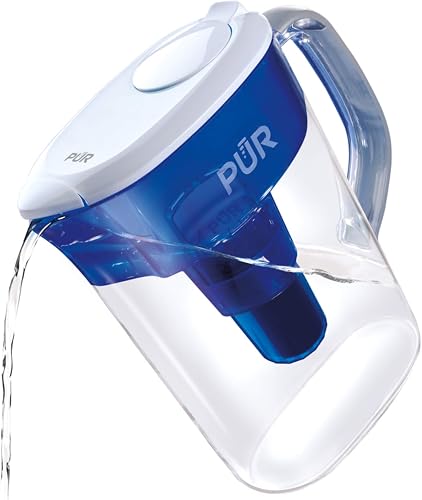
Activated carbon is the most common method, used in pitchers like the Brita OB24/OB06 (4.7 stars, over 50,700 ratings) and the PUR PPT700W (4.5 stars, 4,300 ratings). Activated carbon is designed to reduce chlorine taste and odor, certain volatile organic compounds, and some heavy metals. Ion exchange is a second method, found in pitchers like the Aquaphor 516709, and is designed to reduce hardness minerals like calcium and magnesium. A small number of pitchers use alkaline or ultrafiltration methods, which target different water characteristics. No pitcher-style filtration replaces a full reverse-osmosis system for contaminant breadth, so match the method to what your water actually contains.
Look for Third-Party Certification
A certification from NSF International or a body that tests against NSF/ANSI standards is the clearest signal that a pitcher may help reduce specific contaminants. The Culligan PIT-1, priced at $26.93 and rated 4.2 stars across 183 reviews, carries NSF Certified status. When a pitcher lacks certification, the manufacturer's claimed reductions have not been independently verified. Look for NSF/ANSI 42 (aesthetic effects like taste and odor) or NSF/ANSI 53 (health-effects contaminants like lead) on the product listing or packaging. If a pitcher you are considering shows no certification, that does not mean it does not work, but you have less third-party evidence to rely on.
Match Capacity to Your Household
Pitcher capacity determines how often you will be refilling during a day. The Brita OB24/OB06 dispenser holds 27 cups, making it practical for families or anyone who drinks a lot of water at home. The PUR PPT700W holds 1.65 liters, which suits a single person or couple who keep the pitcher on a countertop and refill it once or twice daily. A pitcher that is too small becomes a constant chore. A pitcher that is too large may sit on the counter for days, meaning the filtered water gets old before it is consumed. For most two-adult households, a 10-cup to 18-cup pitcher is a reasonable middle ground.
Calculate the Real Cost: Filter Life and Replacement Price
The sticker price of a pitcher is rarely the biggest expense. The Brita 35250, for example, is listed at $44.10 and comes with a filter rated for 40 gallons. If you drink about 1 gallon per day at home, that filter lasts roughly 40 days, meaning you will buy around nine filters per year. Always calculate the annual cost of replacement filters before committing to a pitcher. Pitchers with proprietary filters can cost significantly more over 12 months than the original purchase price. Some pitchers are sold in multi-packs that reduce the per-filter cost, so compare the pack count as well as the individual price.
Consider the Container Material and Size
Most pitchers use BPA-free plastic, which is lightweight and affordable but can absorb odors over time. Glass and stainless steel options exist at higher price points and are generally easier to keep odor-free long-term. Pitcher dimensions matter if your refrigerator has a dedicated pitcher door shelf with height limits. The Brita OB24/OB06 dispenser measures 14.57 by 11.18 by 5.63 inches and weighs 3 pounds, so it is better suited to a counter or refrigerator shelf than a narrow door slot. Check your refrigerator's shelf height before buying any pitcher taller than 11 inches.
Factor In Filtration Speed
Most activated carbon pitchers take 5 to 15 minutes to filter a full reservoir, depending on the filter age and the water pressure feeding into it. If you pour a glass and then immediately fill the reservoir, you will have filtered water ready within a reasonable time. Older filters and certain dense block designs can slow flow noticeably, which frustrates daily use. Read recent reviews specifically for comments about flow rate, since slow filtration is one of the top complaints across pitcher categories. If flow rate is a concern, look for pitchers where reviewers specifically mention fast filtering as a positive.
Common mistakes to avoid
- Buying based on brand recognition alone without checking whether the filtration method matches the contaminants in your water.
- Ignoring certification status and assuming all pitchers certified to reduce the same things are equivalent.
- Calculating only the upfront pitcher cost and overlooking annual filter replacement costs, which often exceed the original purchase price.
- Choosing a pitcher that is too small for the household and then running unfiltered water because the pitcher has not had time to filter a full batch.
- Not checking refrigerator shelf dimensions before buying a large-capacity pitcher or dispenser.
- Replacing filters less often than recommended, which allows the filter media to become saturated and may reduce its effectiveness.
Frequently asked questions
How often should I replace my water filter pitcher cartridge?
Most activated carbon pitcher filters are rated for 40 to 200 gallons, which works out to roughly every 2 to 6 months for average household use. Check the spec sheet for your specific model rather than assuming a generic schedule. Using a filter past its rated capacity may reduce its effectiveness, though you may not notice a visible difference in water appearance.
Do water filter pitchers remove lead?
Some pitchers are certified to reduce lead, but not all are. Look for NSF/ANSI 53 certification, which specifically covers health-effects contaminants including lead. A pitcher with only NSF/ANSI 42 certification is designed for aesthetic improvements like taste and odor, not lead reduction. Check the product certification documentation, not just the marketing copy, before relying on a pitcher for lead reduction.
What is the difference between activated carbon and ion exchange in a pitcher filter?
Activated carbon uses a porous carbon material to adsorb certain organic compounds, chlorine, and some heavy metals as water passes through. Ion exchange swaps unwanted ions, such as calcium and magnesium that cause hardness, for less problematic ions. Some pitchers combine both methods in a single cartridge. Neither method covers the full range of potential contaminants, which is why knowing your specific water quality concerns helps you choose the right technology.
Is a more expensive filter pitcher always better?
Not necessarily. A higher price can reflect better materials like glass or stainless steel, larger capacity, faster flow rate, or broader filtration capability. But the most important factor is whether the filtration method and any certifications match what you need to reduce in your water. A $27 NSF-certified pitcher may be more appropriate for your water quality than a $100 pitcher with no third-party certification.
Can I leave filtered water in the pitcher for several days?
Most manufacturers recommend storing filtered water in the refrigerator and consuming it within 1 to 2 days for best taste. Filtered water has had some of the chlorine removed, which means there is less residual disinfectant to inhibit bacterial growth compared to untreated tap water. Keeping the pitcher cold and clean, and washing the pitcher itself regularly, reduces the risk of the stored water developing off tastes or odors. Questions about water safety for specific health situations should be directed to a health professional, not a product guide.