Pitcher vs Faucet Filter: Which One Is Right for You
Recommended picks


How Each Type Works
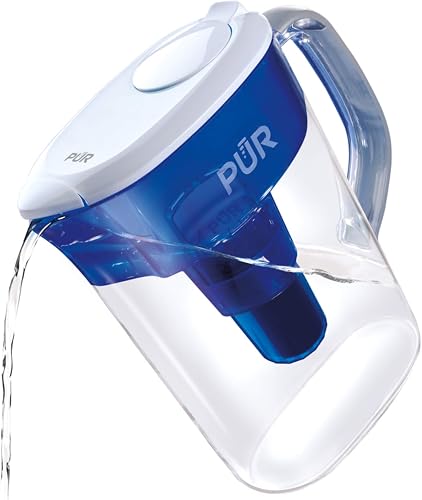
A pitcher filter typically uses an activated carbon block or ion exchange resin that water passes through by gravity. The Brita OB24/OB06 (rated 4.7 stars across 50,700 reviews, $45.50) uses activated carbon and holds 27 cups, which covers a small family for most of a day. The PUR PPT700W ($35.40, 4.5 stars, 4,300 reviews) also relies on activated carbon and holds 1.65 liters. A faucet filter attaches to your faucet aerator and pushes tap pressure through a carbon block, delivering filtered water in seconds rather than the several minutes a pitcher takes to drain through its media.
Upfront Cost and Ongoing Replacement Cost
Pitchers generally cost between $20 and $60 for the unit. Faucet filter units run a similar range, though the attachment hardware occasionally adds a few dollars. Where the costs diverge is in replacement cartridges. Most pitcher filters are rated for 40 gallons per cartridge, meaning a household drinking two gallons a day replaces a filter every three weeks. Faucet filter cartridges are often rated for 100 gallons or more, so a comparable household replaces them less frequently. Add up cartridge costs over 12 months before assuming one format is cheaper.
Filtration Capability
Neither format automatically outperforms the other. What matters is whether the specific cartridge carries a certification. The Culligan PIT-1 pitcher ($26.93, 4.2 stars, 183 reviews) carries NSF certification, which means it has been independently tested to the performance claims on the label. Many pitchers and faucet filters on the market carry no such certification. When reviewing any product, look for NSF/ANSI Standard 42 (aesthetic effects like chlorine taste and odor) or Standard 53 (health-effects contaminants). If a product is certified to reduce a specific contaminant, the listing will say so. If it is not certified, it may help reduce some contaminants but no independent body has verified the claim.
Convenience and Daily Use
Pitchers require you to refill them regularly, and you will occasionally open the fridge to find an empty or near-empty pitcher. Households with higher daily water consumption find this friction adds up. A faucet filter eliminates the wait, but it occupies the aerator connection on one faucet and will not fit every faucet style, particularly pull-down or pull-out kitchen faucets. Pitchers have no installation requirements at all, which makes them ideal for renters, for use in offices, or for anyone who wants to avoid any plumbing contact.
Portability and Flexibility
A pitcher can go on any counter, into any fridge, or travel with you. A faucet filter is fixed to one faucet until you remove it. If you move, you unscrew the faucet filter and reinstall it. If you want filtered water in more than one location, you need a pitcher for the second spot or a second faucet filter unit. Pitchers also give you chilled filtered water if you store them in the fridge, which faucet filters do not.
Who Should Choose Which
Choose a pitcher if you drink one gallon or less per day, prefer zero installation, want cold filtered water available, or rent and cannot modify fixtures. Choose a faucet filter if your household uses more than one gallon of filtered water daily, you are tired of refilling a pitcher, and your faucet accepts the filter adapter. If your main concern is getting a certified product, check the certification label on whichever format you prefer rather than assuming one format is more effective than the other.
Common mistakes to avoid
- Assuming all filter pitchers reduce the same contaminants. Filtration performance varies by cartridge, not by the pitcher brand or price.
- Ignoring the per-gallon cartridge cost when comparing upfront prices. A cheap pitcher with expensive replacement filters can cost more over a year than a pricier faucet filter.
- Overlooking faucet compatibility. Pull-down and pull-out faucets often cannot accept a standard faucet filter adapter.
- Replacing pitcher filters on a calendar schedule instead of tracking actual gallons filtered. A household drinking more water will exhaust a cartridge faster than the rated weeks suggest.
- Choosing a product with no certification and assuming it removes a specific contaminant. Certified to reduce is a factual claim; designed to reduce or may help reduce is not a guarantee.
- Storing a full pitcher outside the fridge and then drinking water that has been sitting at room temperature for many hours. Keep filtered water refrigerated to limit bacterial growth in the pitcher reservoir.
Frequently asked questions
Does a pitcher filter or a faucet filter remove more contaminants?
There is no blanket answer. The cartridge inside the unit determines what it is certified to reduce, not the format. Look for NSF/ANSI Standard 42 or Standard 53 certification on the specific model you are considering. A certified pitcher and a certified faucet filter may reduce similar contaminants if both carry the same certification standard.
How often do I need to replace a pitcher filter cartridge?
Most pitcher cartridges are rated for around 40 gallons per replacement. At one gallon of filtered water per day, that is roughly 40 days. Higher-use households will hit the limit faster. Some pitchers include an indicator light or timer, but tracking actual consumption is more accurate.
Will a faucet filter fit my kitchen faucet?
Standard faucet filters fit most faucets with a threaded aerator. Pull-down, pull-out, and some designer faucets often lack a compatible threaded connection. Check your faucet type before ordering a faucet filter unit, and look for adapter kits if your aerator thread is a non-standard size.
Is it safe to drink water straight from a pitcher filter without chilling it?
The filtration process itself does not require chilling. However, water sitting in a plastic pitcher reservoir at room temperature for extended periods can allow bacterial growth, especially if the pitcher is not cleaned regularly. Keeping your filtered pitcher in the fridge and washing it weekly is a reasonable precaution.
Can I use a pitcher filter and a faucet filter together for better results?
Running water through two filters in sequence is not a standard recommendation. Each certified filter is tested as a standalone unit, and layering two systems does not reliably produce additive results. If you want stronger reduction of a specific contaminant, look for a single certified product rated for that contaminant rather than doubling up filter formats.